
After participating in our first puzzle hunt, The Grand Hunt Digital, Donna and I decided to make a puzzle box for our Ding Dang Club members.
I’m going to try and write this without any spoilers because, only the oujia knows where this project could end up.

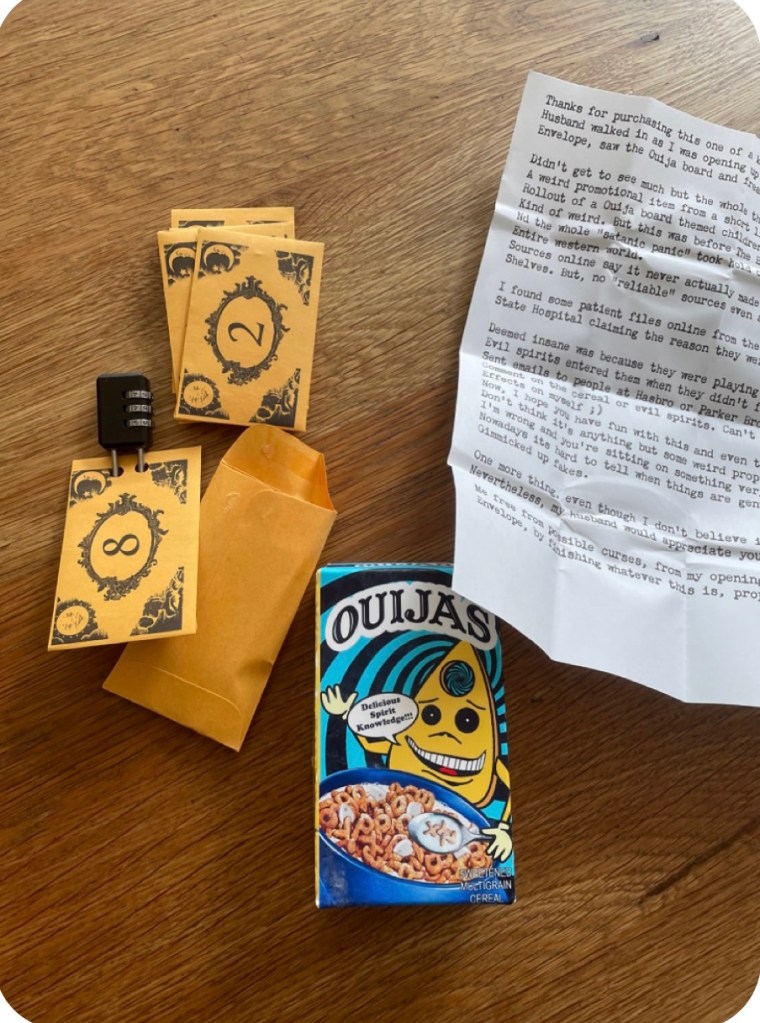
We decided to build the whole thing into one of those single serving cereal boxes since it’s just about the biggest box you can make using a single 8.5×11 sheet of paper. Fleshing the whole idea out took no small amount of coffee. In the end we settled on the whole game being a package from a discontinued 70’s era cereal based on Ouija Boards. This seemed like a good way to threaten demonic possession if you didn’t finish the game.
Coming of age in the 80s this was a pervasive threat behind everything fun or interesting and a great palate to build puzzles on.
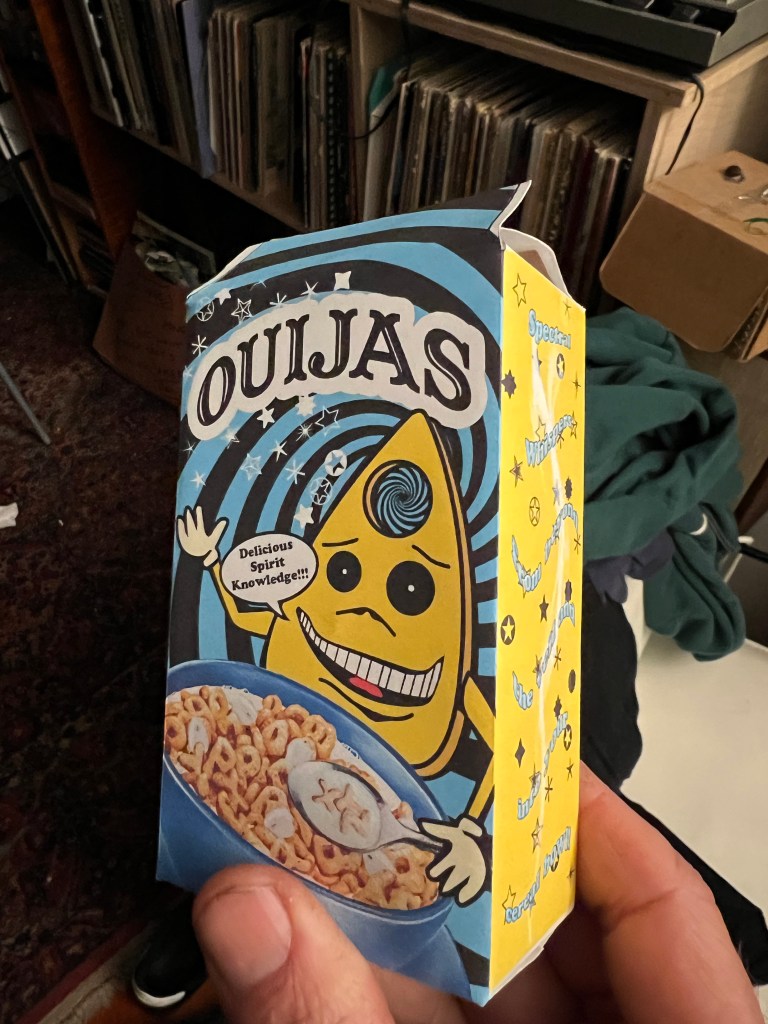
I threw together a cover and printed it out just to test it and found that none of the stock I could run through my printer was going to give that same feel as the chipboard of real cereal boxes so we ended up spray gluing the paper copies onto real boxes. This meant I got to eat a lot of cereal while I worked.
Also, the boxes are way smaller than I thought they were so we were going to have to get inventive with the real estate to fit everything.
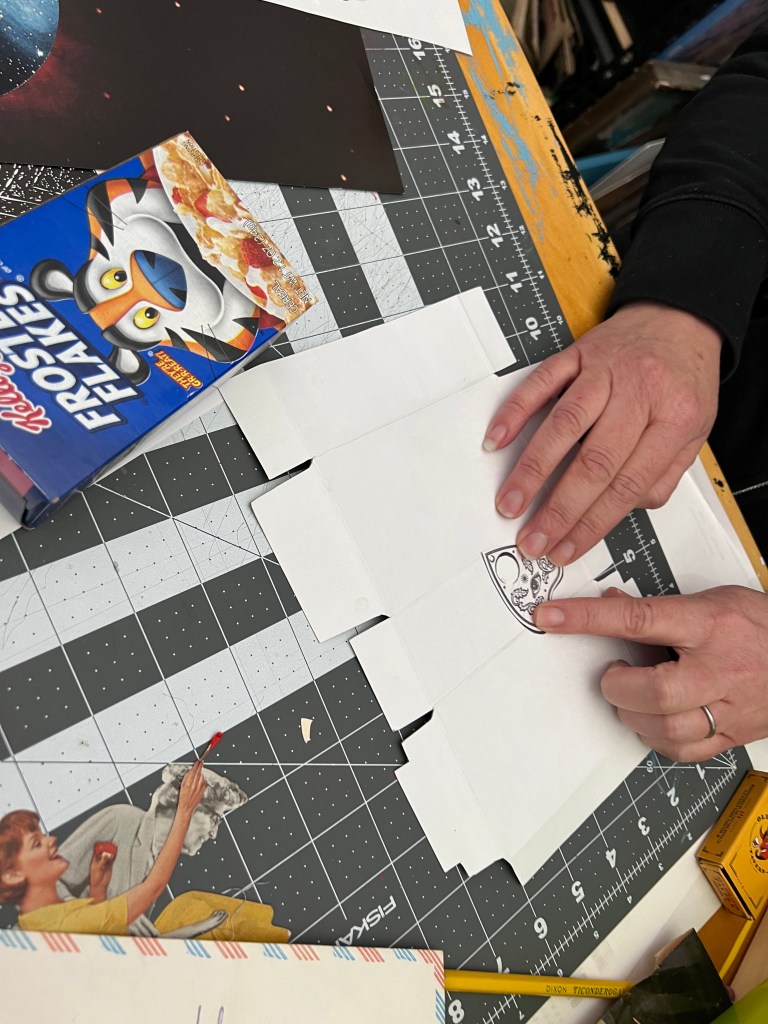
We broke the box down into three different puzzle spaces and got to work trying to fit the puzzle ideas into them.
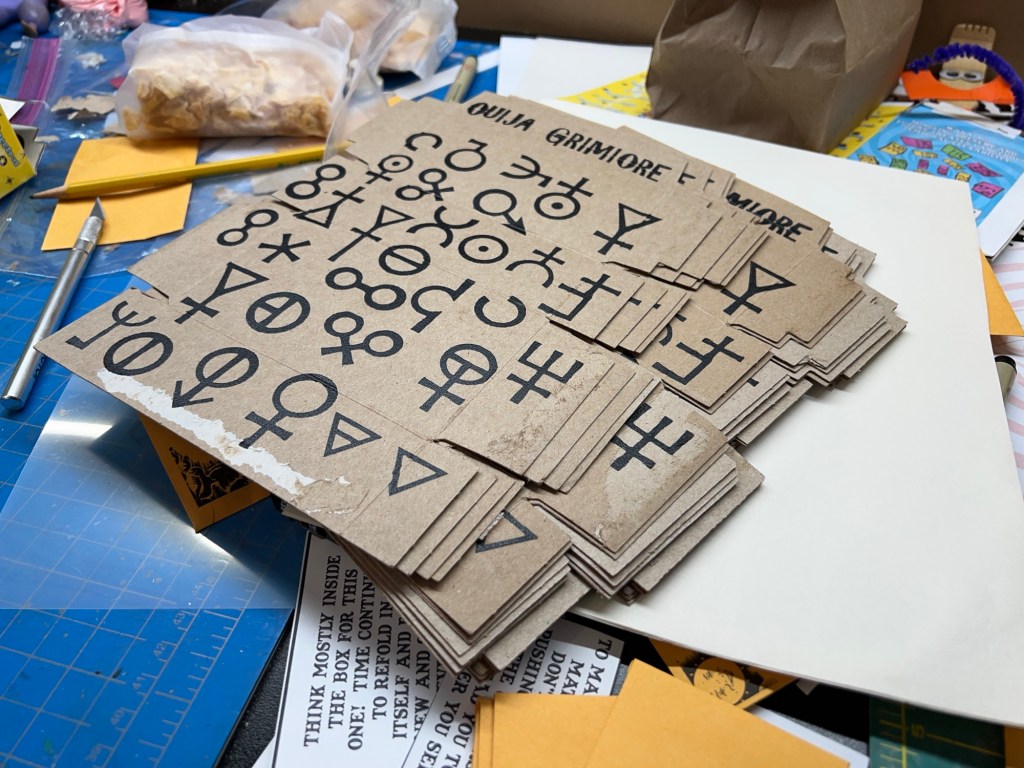
This involved a lot of silkscreening because there was no other way to get things to look and work the way we wanted.


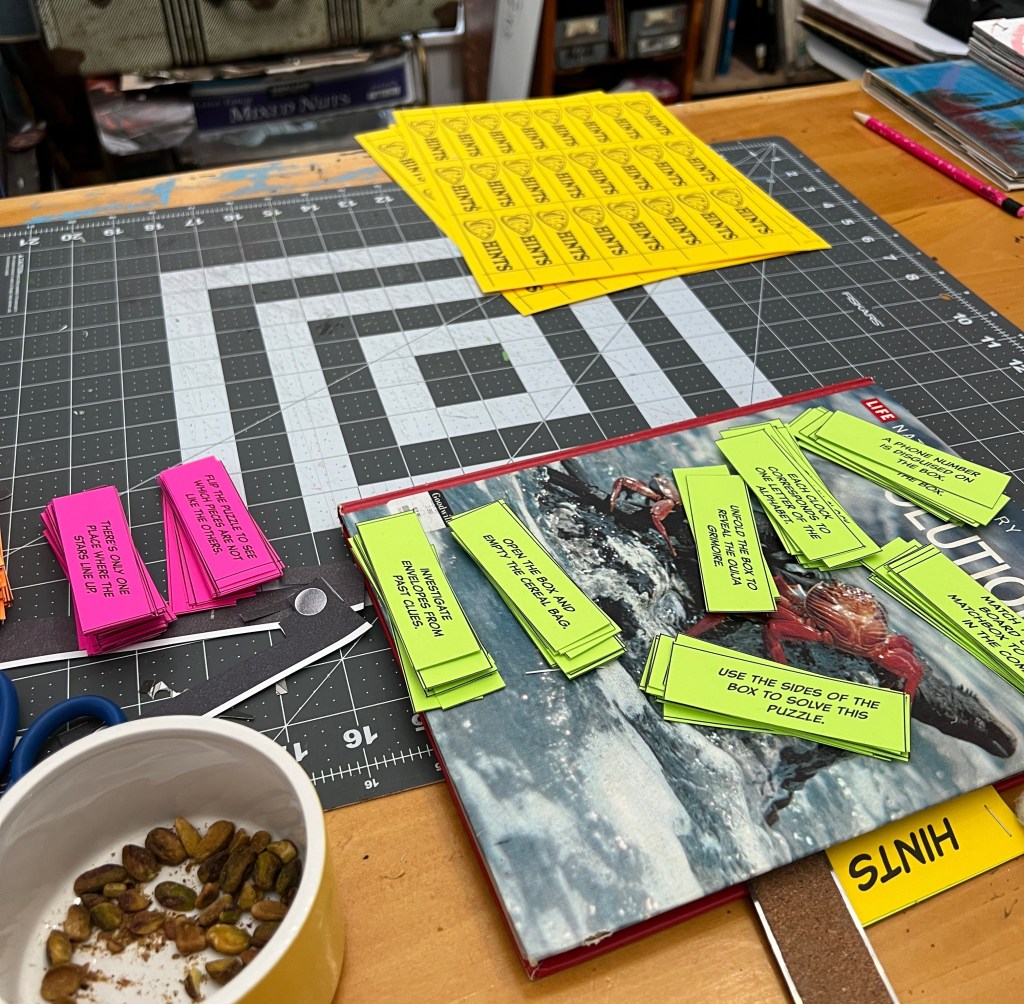
For puzzle clues we used our old standby that works great for treasure hunts around town, the trusty coin envelope. While technically not a part of the box, we were able to use them to hold clues, the hint system, and a place to hide the one word answers for each puzzle as well.
The first envelope held a puzzle that while related was separate from the box because we really fell in love with it and couldn’t figure out where else to put it.

We mocked up a test box and forced invited begged our friends to come over to test it out.

The first run through was a mess and we realized that the design and the clues had so many unintentional red herrings in it that we were going to have to do some reworking to add clarity. On the plus side, the puzzles were great and they loved it!
A lot of the testing on this thing was watching how people interacted with the materials and me deciding things just didn’t look or feel right.
I ended up having to do a lot more silkscreening (all on the pieces inside the box) than I had hoped but in the end, the production value of the whole thing was great.
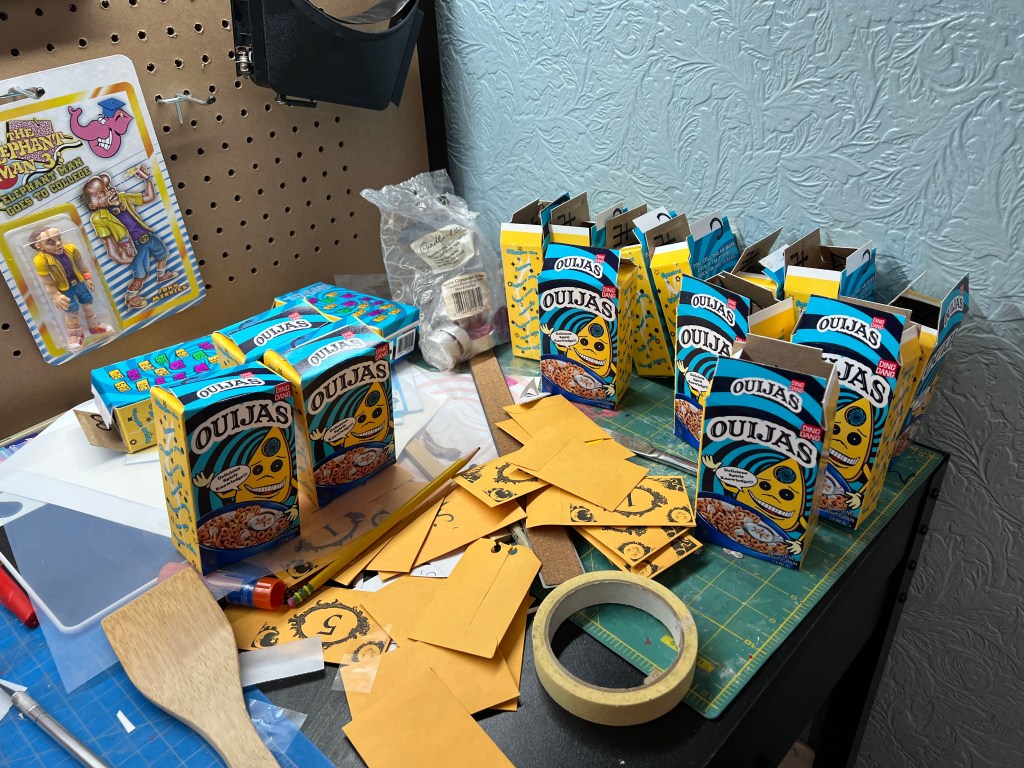
The biggest problem of the whole enterprise was how long it took to produce the pieces and parts.

The last puzzle gave you a three digit number that would unlock this lock. Once opened, the envelope contained a note saying the curse had been lifted and there were some stickers.
Side note: horror of horrors happened at the end of packaging.

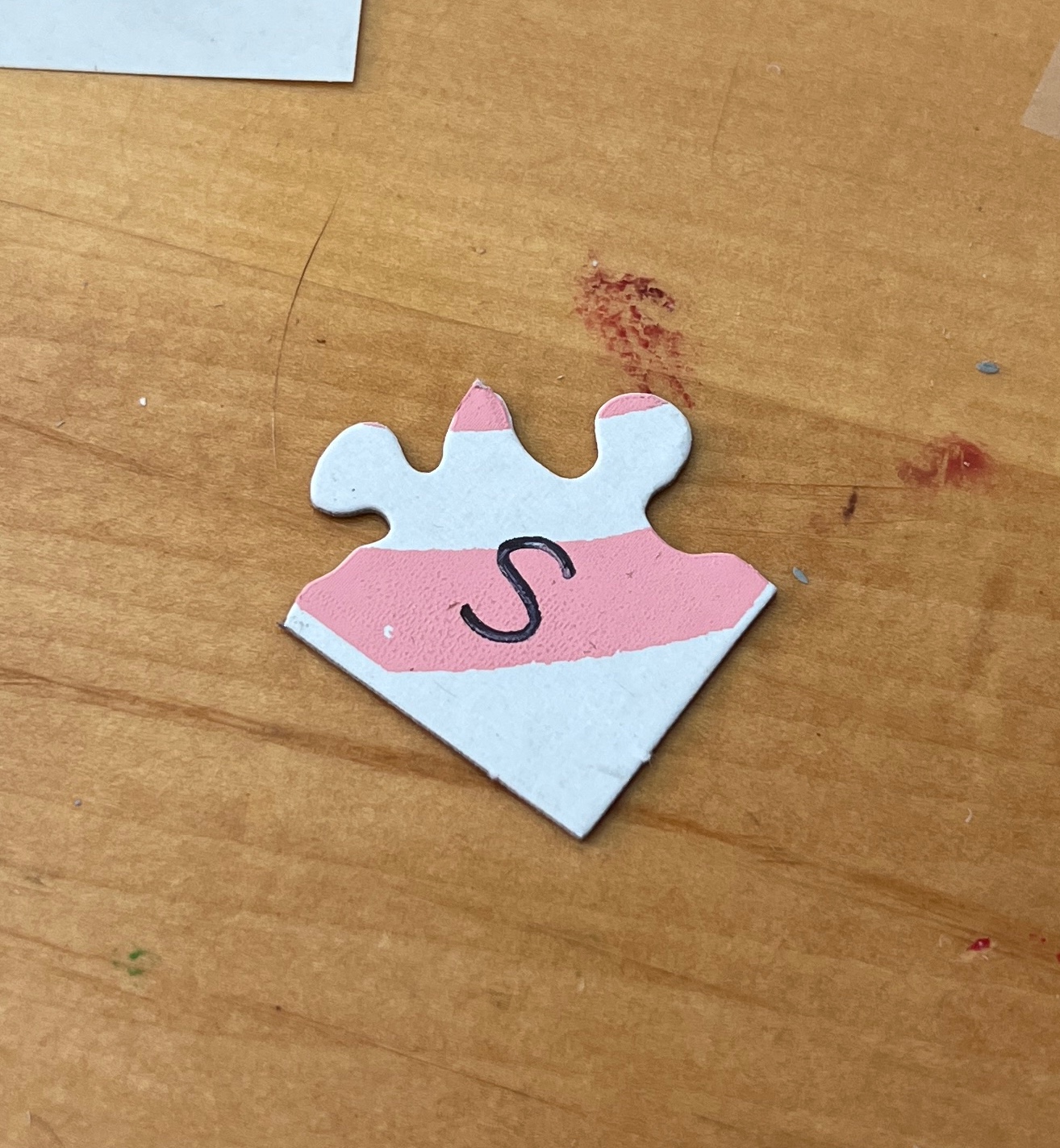
I found a single puzzle piece on the floor which meant I had to open everything up and unseal everything so I could check and make sure each box had all the pieces. In the end it was the 14th box I checked. Out of 16 boxes.
But it was a good first attempt and we’re already started on the next box…

 New Art Hero